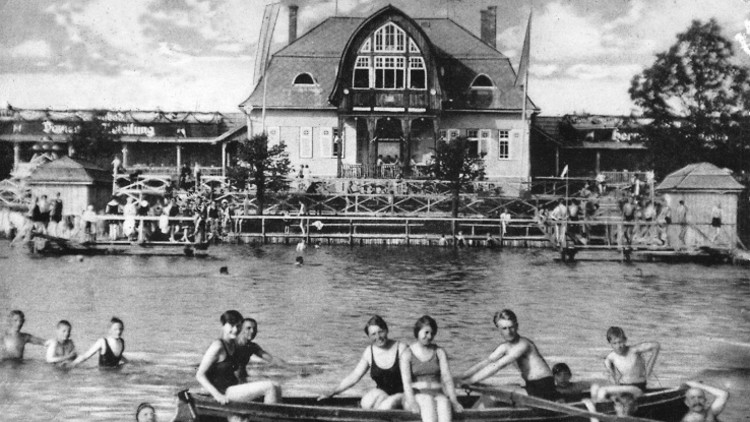
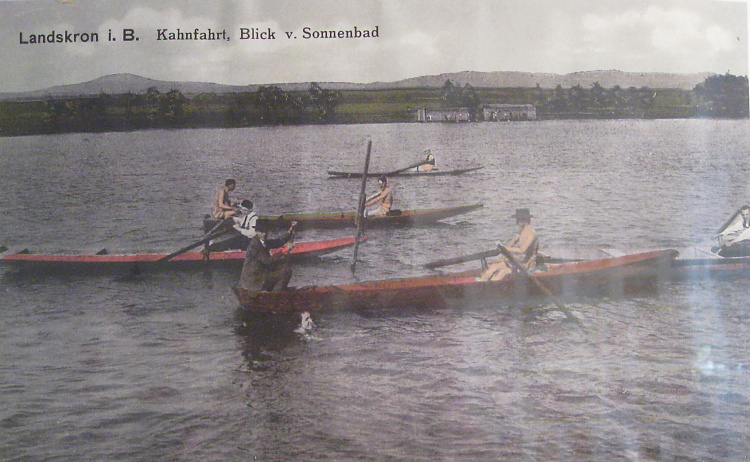
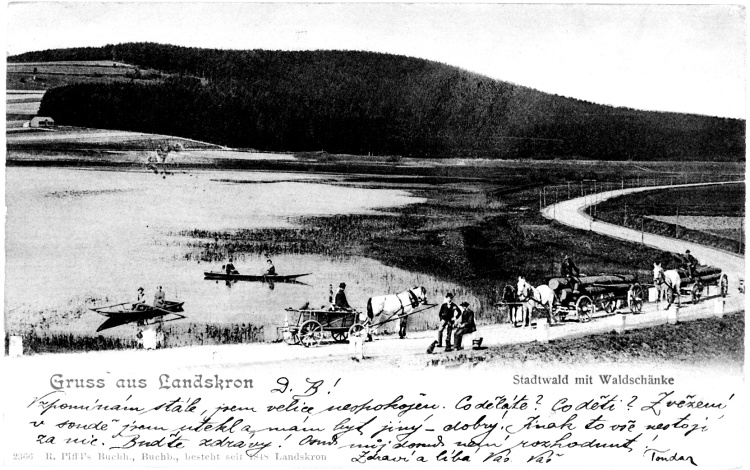
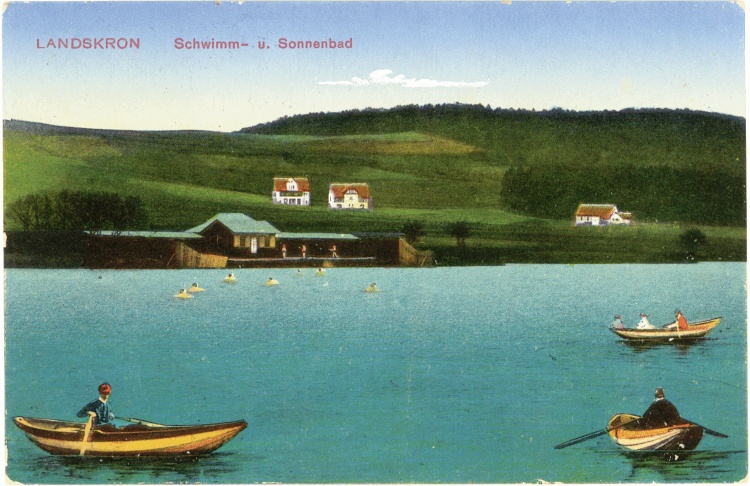
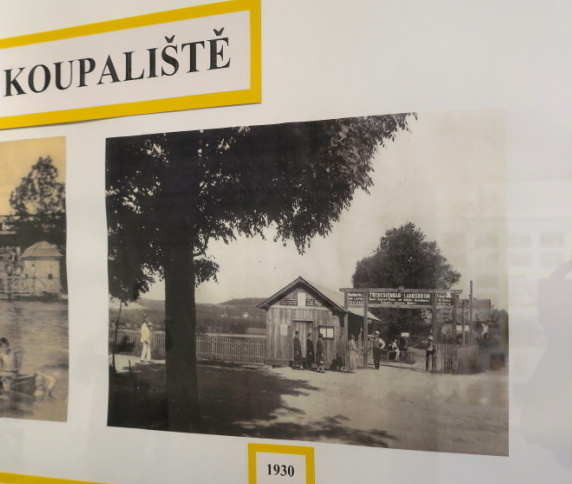
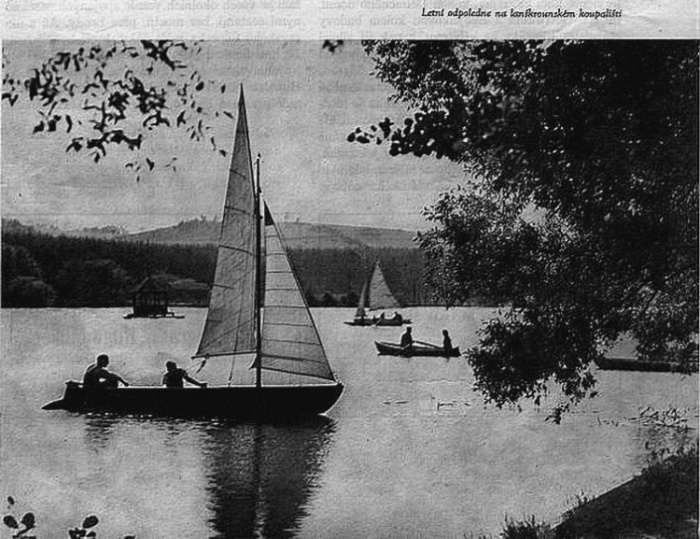
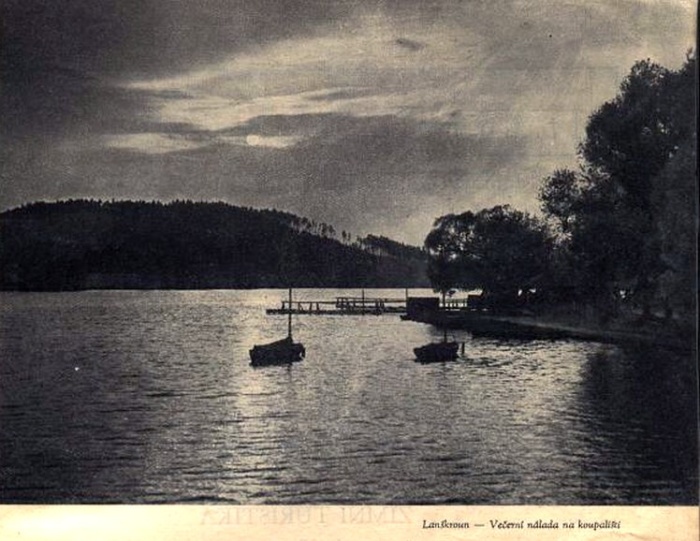
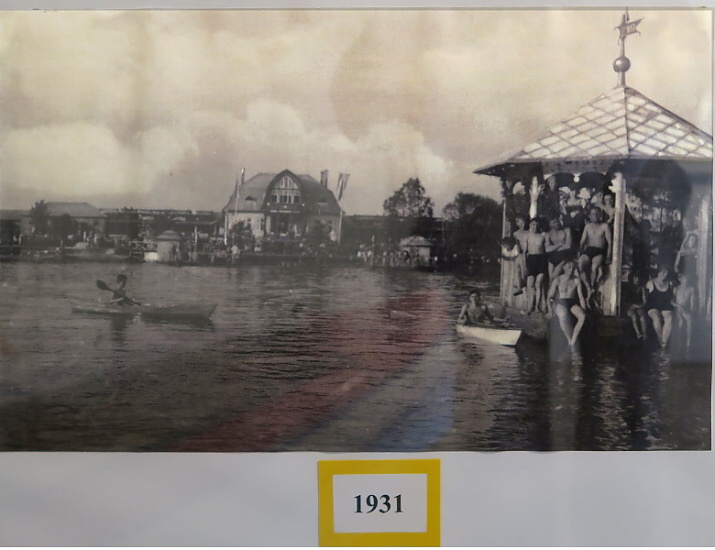
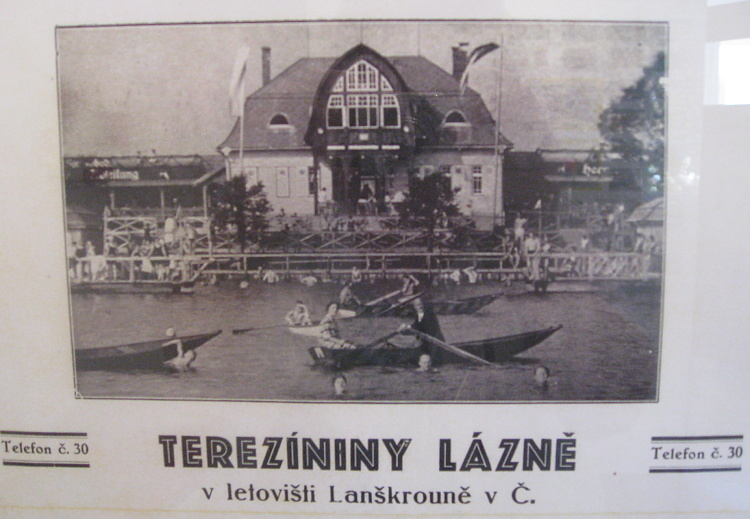
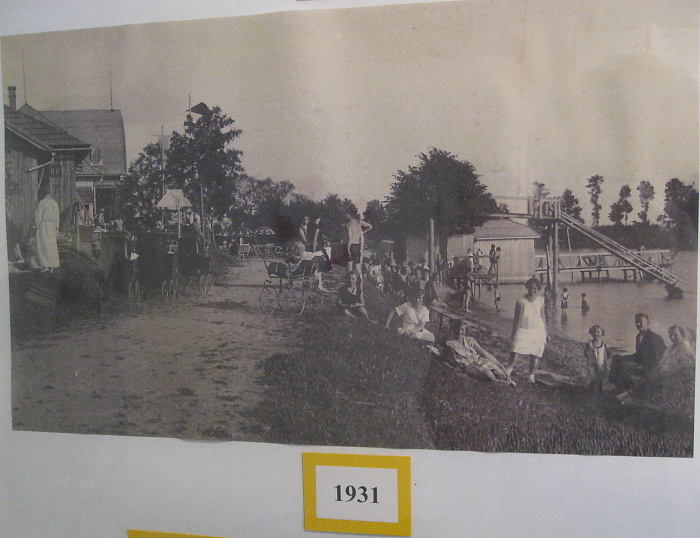
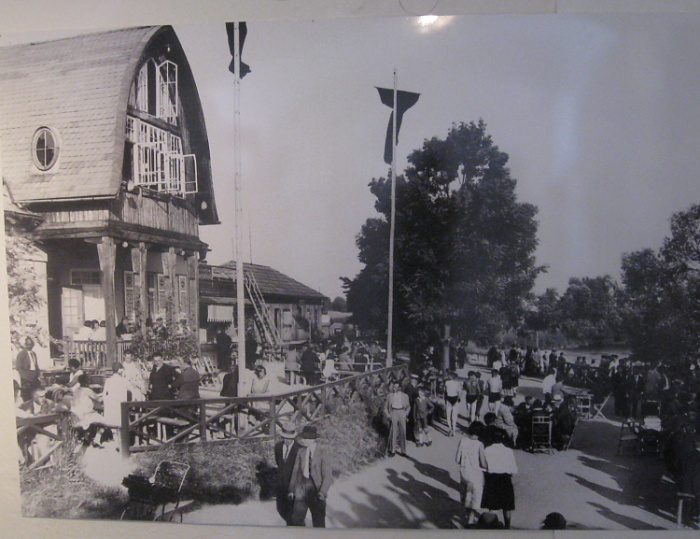
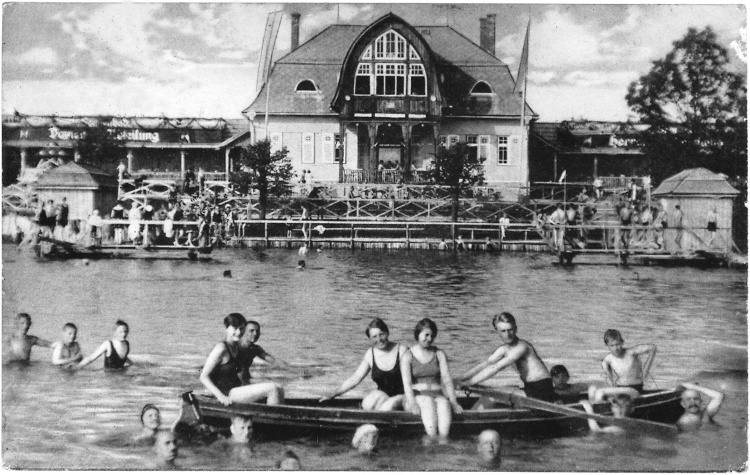
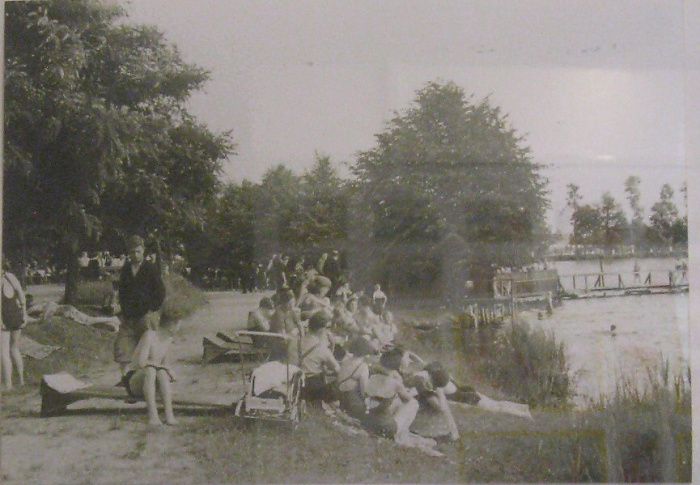
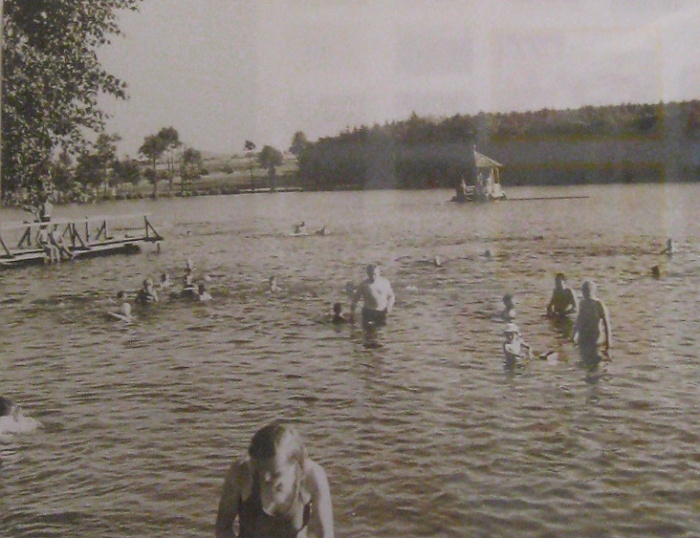
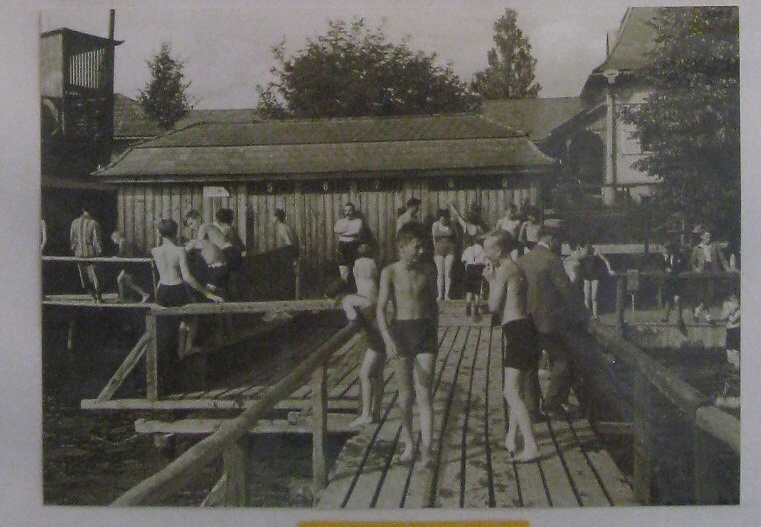
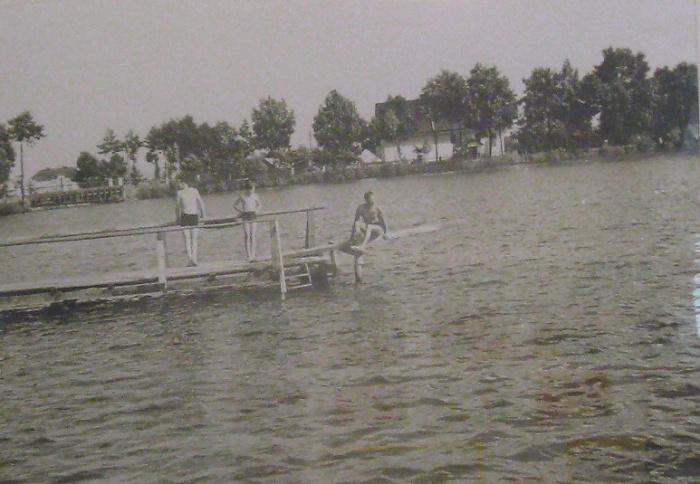
In 1911, Jan Müller built a new swimming pool near the pond dam with wooden changing rooms, deckchairs, and a boat rental service. The swimming pool prospered, and so in 1927, it was modernized. A one-story brick restaurant was built with wooden changing rooms on the sides, a relaxation pavilion stood in the middle of the pond, entrance piers led into the water, etc. The entire complex was named Tereziiny lázně in honor of Müller's wife.
A varied cultural and entertainment life developed here; so-called Venetian nights, water carnivals, and other attractive events were held.
The swimming pool maintained this character with minor fluctuations in the following years and also survived the Second World War. Even the new Czech tenant of the swimming pool restaurant, Karel Čáp, tried to ensure that the entire operation did not deteriorate.
Source: https://www.lanskroun.eu/historie-lanskrounskych-rybniku/d-2741
"The Stork (Čáp) belongs to the water," they used to say
After the war, the Lanškroun Městské koupaliště was operated by the married couple Karel and Marie Čáp. They were 31 and 26 years old. We reminisced about this time with their eldest daughter Jindřiška and Mrs. Čápová's sister, Miroslava Musilová.
"During the war, my parents worked at the hotel Benoni, later it became the school canteen Hvězda. Father cooked and mother worked as a chambermaid. Our parents never called Hvězda anything other than Benonka. After the war, they received the restaurant at the swimming pool under national administration, where they worked from November 1945 to January 1950," says Jindřiška.
The restaurant operated year-round, people came mainly on weekends. The Čáp family also managed three villas in Kypuš, where people from Prague came for summer vacations. While Mrs. Čápová cooked in the restaurant, the mother of Mr. Čáp, whom they called bábinka, cooked in the villas. In the kitchen, Hilda occasionally helped out; she was a German woman who had a Czech husband and therefore did not have to be expelled.
In winter, there was ice skating on the frozen pond.
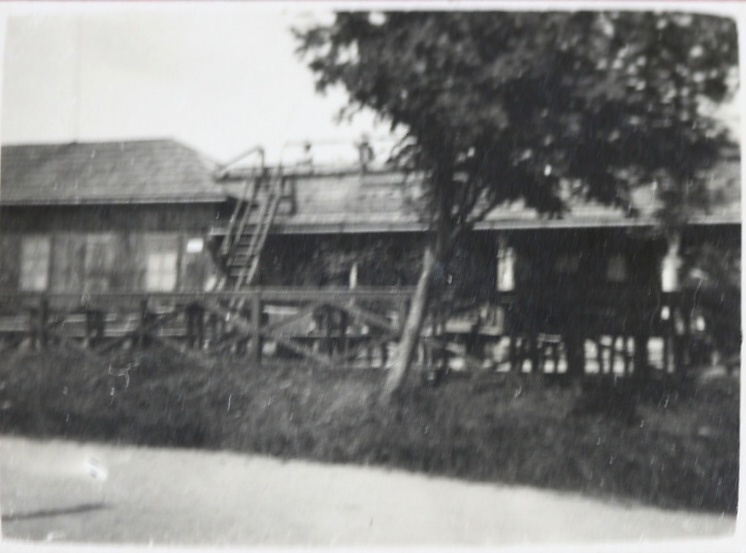
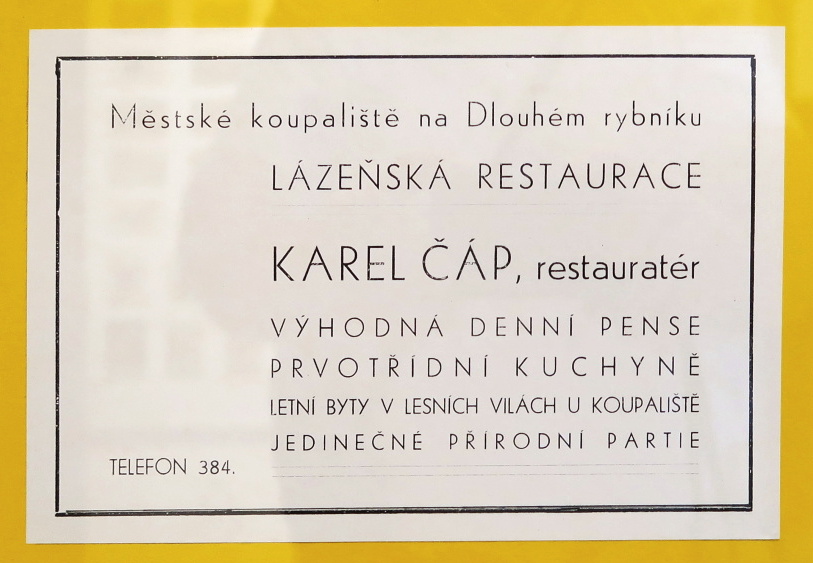
The restaurant building looked similar to how it does today, only on both sides were the original wooden changing rooms. The layout of the building was different. On the ground floor, right at the entrance, there was a kitchen on the left and a taproom on the right. One entered the restaurant through it. On the left in the taproom was a wooden, light green booth with a telephone. At that time, they made do with only three-digit telephone numbers; the Městské koupaliště had the number 384. In the restaurant were wooden boxes, which lasted there until the 1960s.
Upstairs, bábinka lived to the left of the stairs. To the right was the office, and behind it, aunt Mirka had a bed. The hall upstairs was much smaller at that time; it ended at the point of the current narrowing. In the alcove were three small rooms with sloping ceilings.
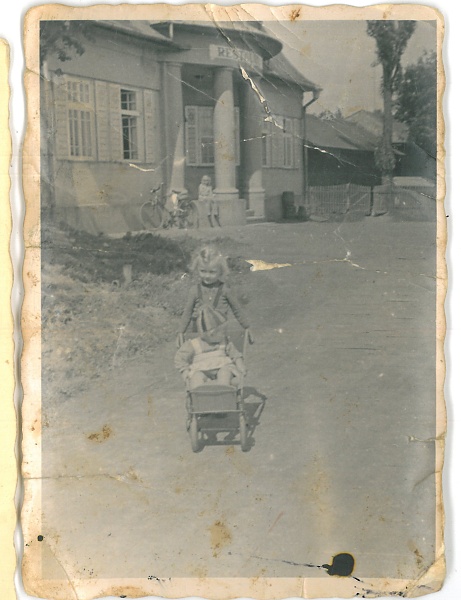
The married couple Čáp had three daughters born to them during their time at the swimming pool. And exactly on August 1, 1948, the day the middle daughter Alena was born, a big carnival was held here. "Mother told," says Jindřiška: "that she was just about to give birth. That's why she walked from the swimming pool to Sázava to see her parents, and on the way, she stopped for the midwife. Before she set off, she hid the cash bag in my pram. But she didn't have time to tell anyone. Father thought someone had stolen it. Only later was the cash bag found; I don't even know how long after. You can see that even back then, mother trusted me," Jindřiška laughs.
At the swimming pool, they allegedly made very good ice cream. And every Sunday, Mrs. Čápová baked something sweet. She made excellent věnečky, punčové řezy, and for the children, she prepared piškoty. On Sundays, day-trippers as well as the dignitaries from Lanškroun and the surrounding area came to the swimming pool for lunch.
Every April, on St. George's Day, when, according to weather lore, snakes and scorpions come out, they used to go into the marsh between Dlouhý rybník and Olšový rybník for frogs. Mrs. Mirka remembers: "We collected them in a sack. Then we sat by the back door of the restaurant and sorted them, because not all of them were suitable. The ones that fitted, Karel threw back into the sack, and the ones that did not fit, he let go." Mr. Čáp then made a delicacy out of them – frog legs. "Six pairs of legs were pricked on a skewer, coated, and fried like a schnitzel," explains Jindřiška. People from Prague who were accommodated in the villas didn't know about frog legs, so they came for them and liked them very much.
They also made křapáče, and for the children, they spread bread with mustard. A slice was sold for fifty hellers.
At the time when the Čáp family worked at the swimming pool, all three daughters were small and were occasionally babysat by their aunt Mirka, who was only a few years older. She got into trouble in connection with babysitting two-year-old Jindřiška in 1948. Instead of babysitting, she went swimming and the little girl got lost. Everyone was looking for her, including the constables, but she could not be found. By then, the gazebo in the middle of the pond was gone, as we know it from period photographs, but only a wooden raft remained there, and birch trees and benches were placed on it. There was a great fear that the little girl wanted to get to this very raft. Eventually, Jindřiška was found between the restaurant and the wooden changing rooms, where she was playing with the boys. The very fact that the Čáp family had three children and no one to look after them led to the decision to leave the swimming pool in January 1950.
The Městské koupaliště, just like for example Slavie, Střelnice, Beseda, and the cultural center, belonged to the state enterprise Restaurace a jídelny (RaJ). That is why it happened even later that Mr. Čáp went to the swimming pool to help out occasionally.
Talking with Jindřiška Čápová and Miroslava Musilová
recorded by Marie Hrynečková.
Photos:
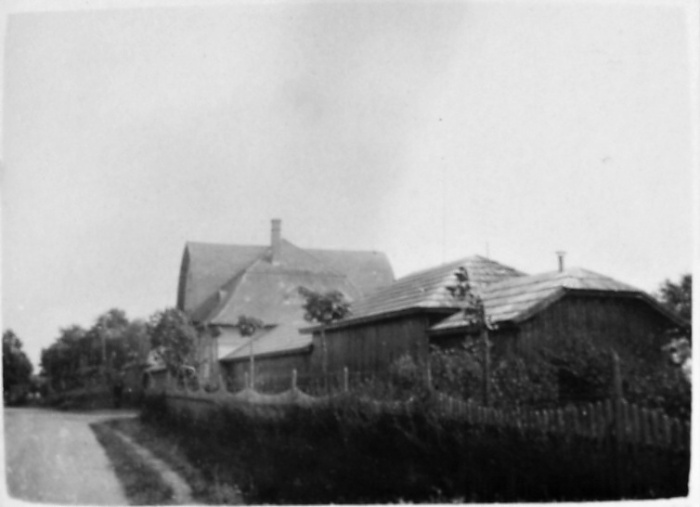
1 – Year 1914, source: recent exhibition Městské muzeum Lanškroun, "Plavky ve světě módy 1890-1990."
2 and 3 – Private archive of Čeněk Kotrba.
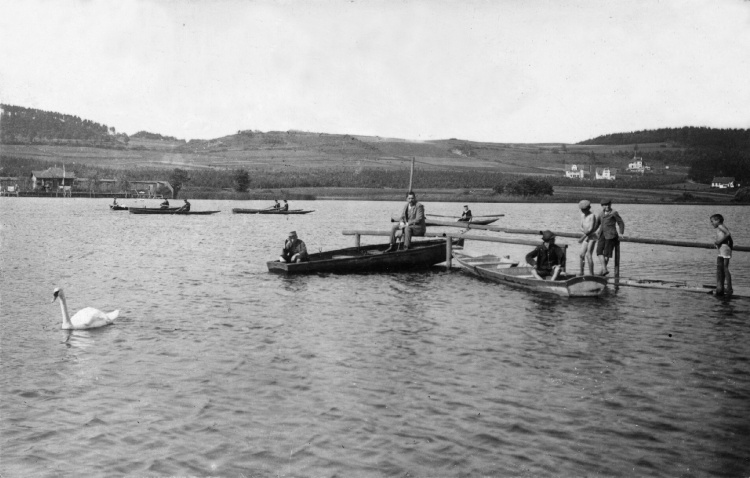
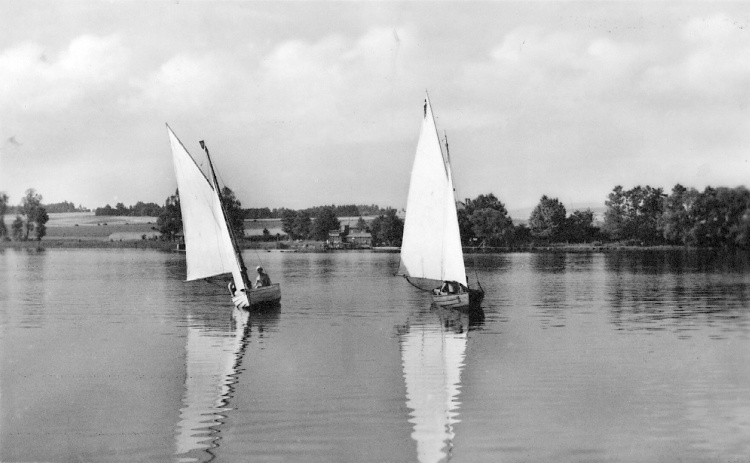
4 to 22 – The thirties of the last century. Used are photographs from an exhibition at the Městské muzeum Lanškroun (photo by Stanislav Vimr and Marie Hrynečková). No. 11 – In the middle of the pond was a gazebo; when swimming across the pond, swimmers rested halfway in the gazebo and then continued. No. 6, 7, 8 and 10 – archive of Č. Kotrba. Numbers 12 and 13 from the photo album of M. Jansa.
23 – Advertisement for the Lázeňská restaurace of Karel Čáp. Source: Exhibition "Plavky ve světě módy 1890-1990."
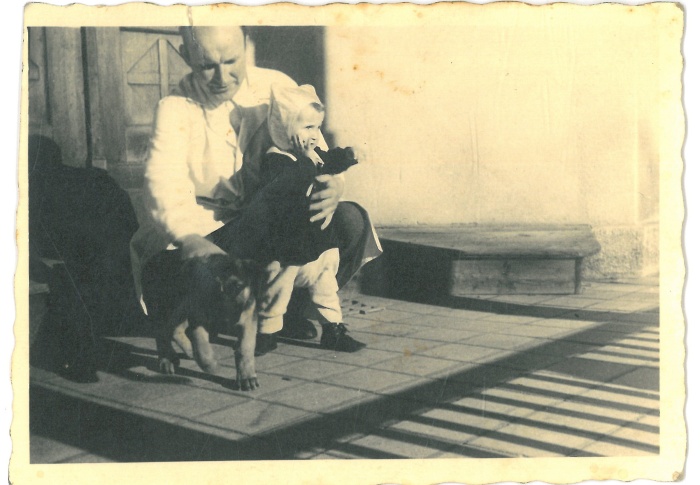
24 – Karel Čáp with Jindřiška in front of the restaurant, year 1948.
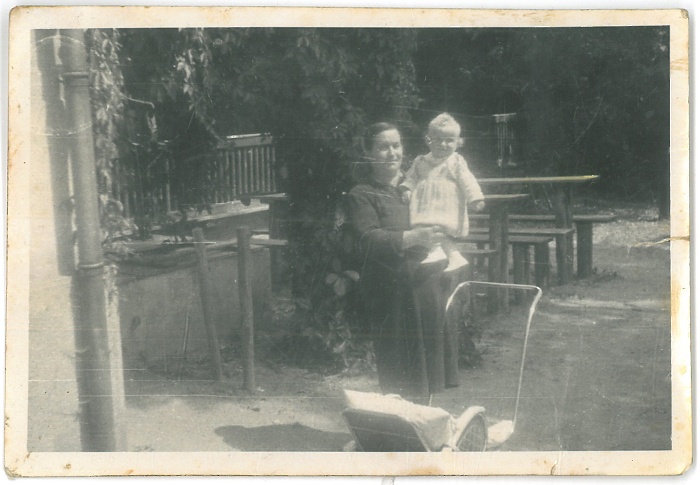
25 – Mother of Karel Čáp with her granddaughter, behind them is the wooden seating area, year 1948.
26 – Jindřiška in front of the restaurant, year 1948.
27 – Jindřiška with her sister Alena, year 1949.
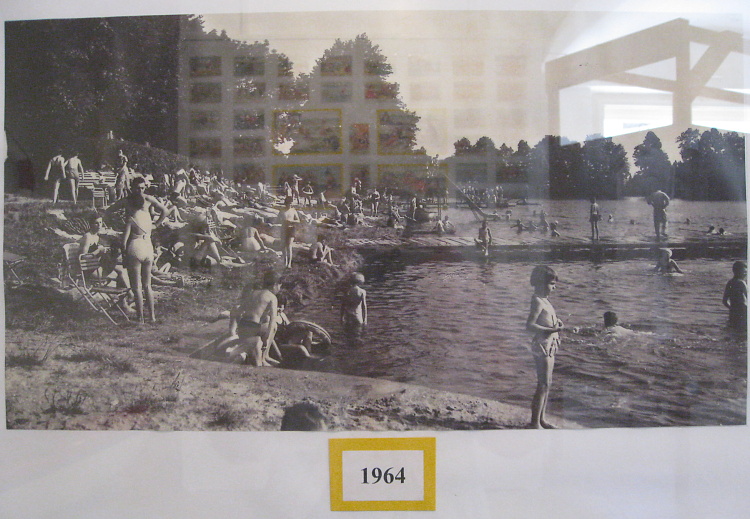
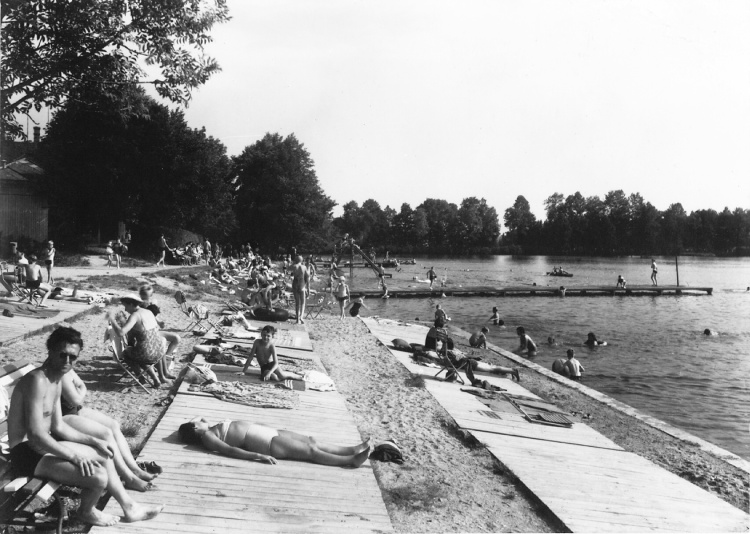
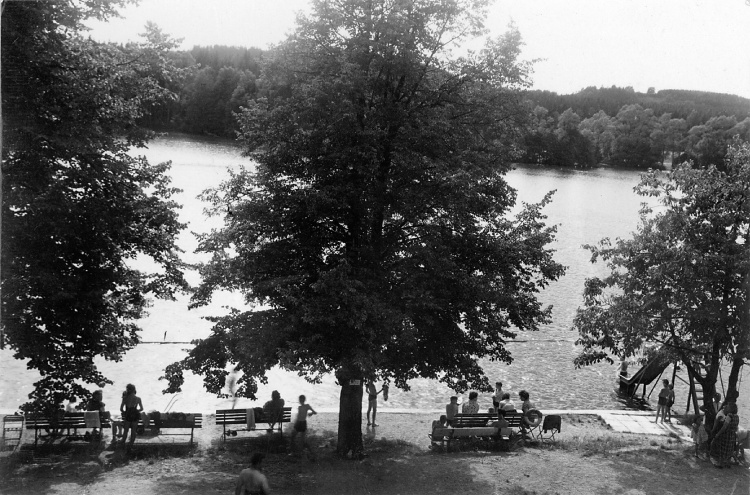
28 to 30 – The sixties of the last century. No. 29 and 30 – archive of Č. Kotrba.




https://www.lanskrounsko.cz/en/history/views-into-history/11759-cap-patri-k-vode-2#sigProIdcb21760011